
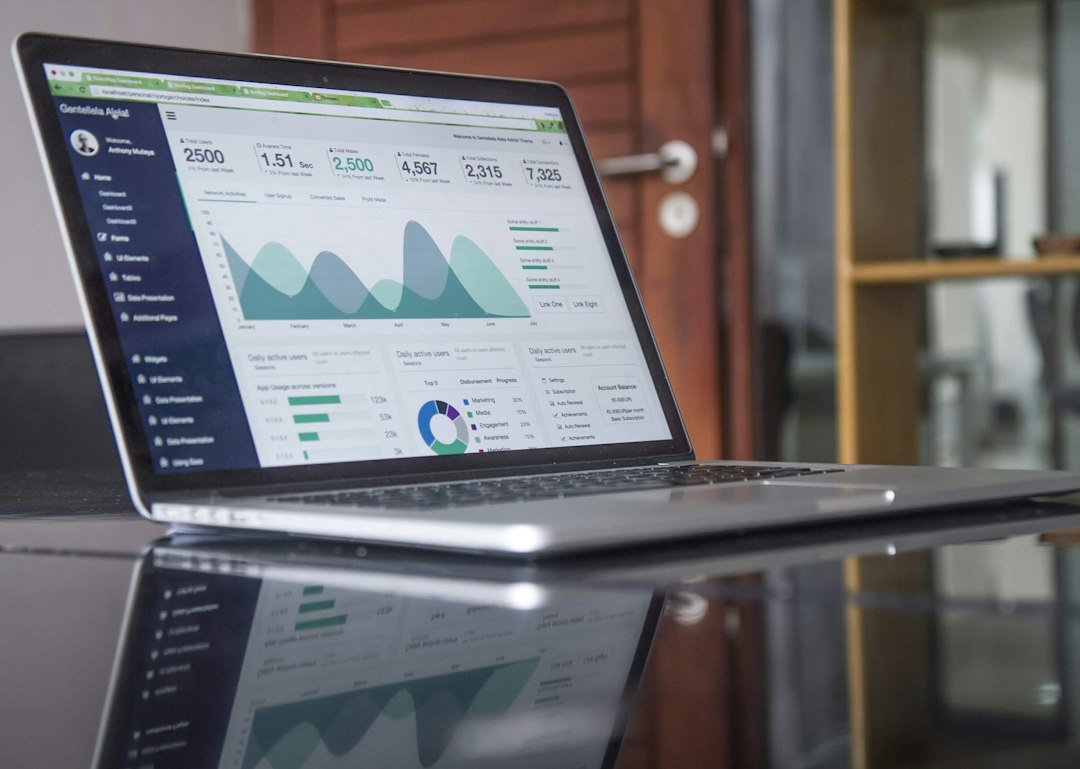
To track local SEO results, monitor Google Business Profile Insights for search views and direction requests, use Google Search Console to measure local keyword rankings, and set up Google Analytics 4 to follow website traffic from local searches. Together, these three free tools give you a clear picture of whether your local SEO is working.
Key takeaways
- Google Business Profile Insights shows how customers find and interact with your listing before they ever reach your website.
- Google Search Console reveals which local keywords send traffic and how your pages rank for them.
- Google Analytics 4 connects local search traffic to real business outcomes like calls, form fills, and purchases.
- Tracking direction requests and phone call clicks tells you whether local SEO is driving foot traffic, not just impressions.
- Reviewing these metrics monthly lets you catch problems early and double down on what is working.
Why do Long Island businesses struggle to measure local SEO?
Most small business owners on Long Island know their local SEO needs work, but very few have a consistent way to measure whether the work they are doing is actually paying off. Without clear tracking, it is easy to spend money on SEO and have no idea if it is moving the needle.
The core problem is that local SEO success lives across multiple platforms at once. Your Google Business Profile, your website, and third-party directories all contribute to local rankings, but none of them talk to each other automatically. You have to connect the dots yourself.
The good news is that Google gives you three free tools that, used together, cover almost everything a Long Island small business needs. You do not need expensive software to start. You need a habit of checking the right numbers on a regular schedule.
What should you track in Google Business Profile Insights?
Google Business Profile Insights is the starting point for any local SEO measurement effort. It shows you what happens before a customer ever lands on your website, which is exactly where local search decisions are made.
Log into your profile at Google Business Profile Help and look for the Performance section. The metrics that matter most for Long Island businesses are:
- Search impressions: How many times your profile appeared in Google Search or Maps results.
- Direction requests: How many people asked for directions to your location. This is a strong signal of real-world foot traffic intent.
- Phone call clicks: How many people tapped your phone number directly from your listing.
- Website clicks: How many people clicked through to your site from your profile.
- Search queries: The actual words people typed before finding your listing. These are gold for understanding what local customers want.
Pay close attention to whether people are finding you through direct searches (someone searching your business name) or discovery searches (someone searching a category like plumber in Huntington). Discovery searches mean your local SEO is working. If that number is flat or falling, something needs to change.
For a deeper look at how to get more out of your profile, see how to optimize your Google Business Profile with photos, posts, and Q&A to rank higher locally.
How do you use Google Search Console for local keyword tracking?
Google Search Console shows you how your website performs in organic search, including which local keyword phrases are sending traffic to your pages. If you have not connected your site yet, do that first through Google Search Central documentation.
Once verified, go to the Performance report and filter by queries that include your town, county, or neighborhood. For a business in Nassau or Suffolk County, you might look for phrases like HVAC repair Smithtown, best dentist in Massapequa, or landscaper near Babylon. These tell you where you are already ranking and where you have gaps.
How to read impressions versus clicks
A query with high impressions but low clicks usually means you are ranking on page one but your title tag or meta description is not compelling enough to earn the click. That is a quick win: rewrite the page title to be more specific and relevant to what the searcher wants.
A query with decent clicks but no conversions on your site points to a landing page problem rather than an SEO problem. The local SEO services at Orgonas Digital Marketing focus on both sides of that equation, rankings and what happens after the click.
Setting up a local keyword comparison table
Export your top 20 queries monthly into a simple spreadsheet. Track impressions, clicks, average position, and click-through rate. Here is a basic framework:
| Keyword | Impressions | Clicks | Avg. Position | CTR |
|---|---|---|---|---|
| plumber Babylon NY | 480 | 22 | 4.2 | 4.6% |
| emergency plumber Suffolk County | 210 | 8 | 7.1 | 3.8% |
| water heater repair Long Island | 95 | 3 | 11.4 | 3.2% |
Reviewing this table month over month shows you trends that a one-time snapshot never will. Positions slowly climbing, clicks holding steady, and CTR improving are all healthy signs.
How does Google Analytics 4 help you measure local SEO impact?
Google Analytics 4 (GA4) connects the traffic coming from local searches to what that traffic actually does on your site. That connection is what turns SEO from a vanity exercise into a business outcome you can defend.
Start by setting up key events in GA4. For most Long Island service businesses, the events that matter are phone link clicks, form submissions, appointment bookings, and direction link clicks if your site includes one. Without event tracking, you are only counting visitors, not measuring value.
How to isolate organic local traffic
In GA4, go to Acquisition, then Traffic Acquisition. Filter by Organic Search as the channel. Then look at landing pages to see which pages on your site are pulling in the most local search traffic. If your plumbing services page is getting organic traffic but zero form submissions, the page copy or call to action needs attention.
You can also use the Search Console integration inside GA4 to connect query data directly to on-site behavior. This shows you which keyword someone searched before they converted, which is powerful information for deciding where to focus your content next. If you are not sure how to find the right keywords to target in the first place, the guide on hyperlocal keyword research for Long Island walks through that process in detail.
What other tools help track local search performance?
The three Google tools above handle the majority of what you need, but a few additional tools fill in the gaps for specific use cases.
- Google Maps rank checkers: Tools like BrightLocal or Local Falcon let you see where your business appears in the local pack across different zip codes on Long Island. A business in Ronkonkoma might rank well for nearby searches but fall off the map for searches in Hauppauge a few miles away. These tools reveal that variation.
- Call tracking numbers: If you run any type of paid or organic campaign, a call tracking service lets you attribute inbound calls to the right source. This is especially useful for comparing how much traffic comes from your GBP listing versus your website’s organic rankings.
- Review monitoring: The volume and recency of your Google reviews affect local pack rankings. Track your review count monthly. A sudden drop in new reviews can signal a need to revisit your review request process, which is covered in depth in the guide to building a Google review strategy.
How do you build a simple local SEO reporting routine?
Consistency beats complexity. A monthly 30-minute review beats an occasional deep dive that never happens. Here is a step-by-step routine that works for most Long Island small businesses:
- Week 1 of every month: Log into Google Business Profile and export the last 28 days of Insights. Record search impressions, direction requests, phone clicks, and your top 10 search queries in a spreadsheet.
- Week 1 of every month: Open Google Search Console and export your top 25 queries filtered by local terms. Update your keyword tracking table with current impressions, clicks, and average positions.
- Week 1 of every month: Check GA4 for organic traffic to your top five local landing pages. Note which pages generated the most key events (calls, form fills, bookings).
- End of month: Compare all three sets of numbers to the previous month. Flag any metrics that dropped more than 15 percent or any new queries appearing in your top 10 for the first time.
- End of month: Write one sentence explaining the biggest change you saw and one action you will take in response. That action item becomes next month’s priority.
This routine keeps measurement practical and ties every number back to a decision. Over time, you build a clear picture of which local SEO activities move the metrics that matter.
The local SEO services at Orgonas Digital Marketing include this kind of structured reporting as a core part of every engagement, so clients always know what is working and why.
Common questions
How long does it take to see local SEO results on Long Island?
Most businesses begin to see measurable movement in Google Business Profile Insights within four to eight weeks of making consistent improvements. Organic keyword rankings in Search Console typically take three to six months to shift meaningfully. The timeline depends on how competitive your category is and how consistently you work on the signals that matter.
Should I pay for local SEO tracking software or stick with free tools?
For most Long Island small businesses, the free tools cover the essentials well. Paid tools like BrightLocal or Semrush add value once you need rank tracking across multiple zip codes or want to monitor competitors. Start with free tools and upgrade only when you have specific questions those tools cannot answer.
What is a good benchmark for Google Business Profile direction requests?
There is no universal benchmark because the number varies heavily by business type, location, and competition. What matters more than any single number is the trend over time. A steady month-over-month increase in direction requests is a reliable indicator that your local visibility is improving.
Can I track local SEO for multiple service areas across Long Island?
Yes. If you serve both Nassau and Suffolk County, use Search Console to filter by town-level queries separately for each area. Tools like Local Falcon let you run a grid-based rank check across your entire service area so you can see exactly where you show up and where you drop off. This is especially useful for service area businesses without a physical storefront.
How does tracking local SEO differ for a service area business versus a storefront?
Storefront businesses focus heavily on direction requests and Maps visibility because foot traffic is a primary goal. Service area businesses should weight phone call clicks, website form submissions, and organic landing page traffic more heavily since customers are not coming to you. Both types benefit from the same core tracking setup, with slightly different emphasis on which metrics to prioritize. For a deeper look at this distinction, see local SEO for service area businesses.
Ready to get serious about local SEO tracking?
Setting up the right tracking takes a little time upfront, but it pays off every month in clearer decisions and better results. If you want help building a local SEO measurement system tailored to your Long Island business, the team at Orgonas Digital Marketing is ready to help. Get in touch with Orgonas Digital Marketing to start a conversation.
Written by Nolan Orgonas, Founder and Creative Director of Orgonas Digital Marketing. Nolan has more than 7 years of experience in web design, SEO, email marketing and digital strategy for businesses, higher education and nonprofits.





